
 by
A terrace vegetable garden is one of the easiest ways to grow fresh, chemical-free vegetables at home, even if you do not have a backyard. With a few grow bags, good potting mix and some sunlight, your rooftop can supply tomatoes, chillies, okra, spinach, beans and more for your kitchen. In Kerala and across India, more families are starting a terrace vegetable garden to cut grocery bills, eat healthier and enjoy a relaxing hobby. This guide explains how to start a terrace vegetable garden in 10 easy steps, which vegetables to grow in each season, how to make compost and how to protect plants from pests and heavy rain.
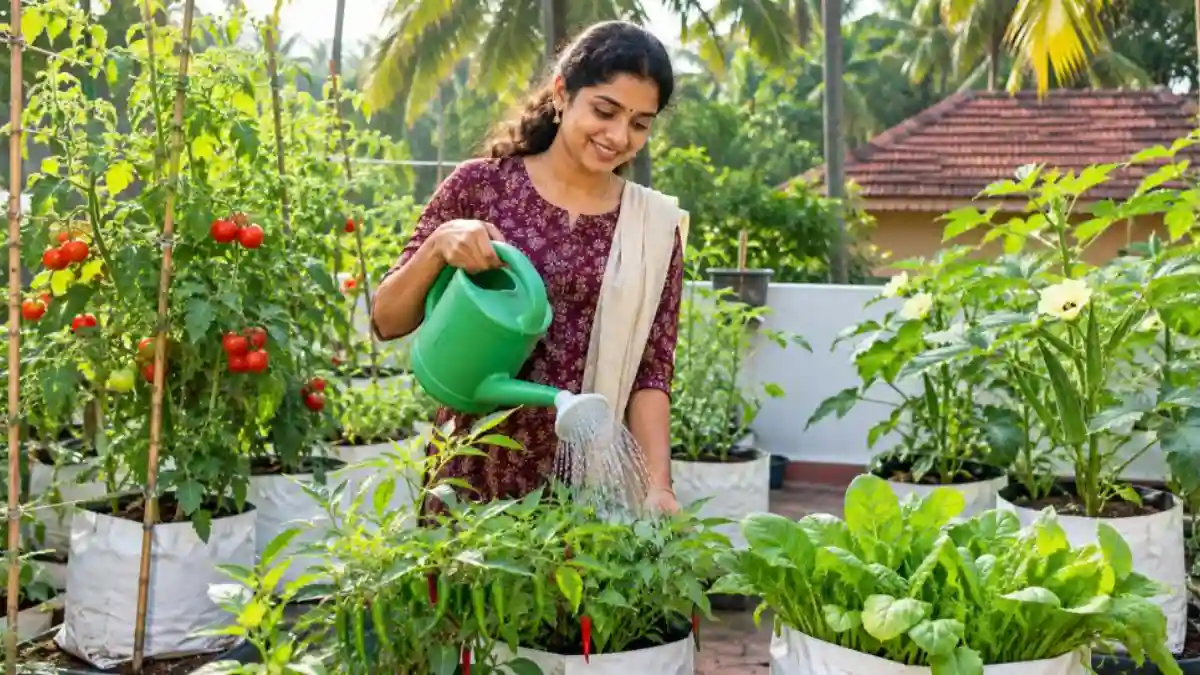
You do not need to be an expert. Start small with five to ten grow bags, learn as you go and expand once you see your first harvest.
Benefits of a Terrace Vegetable Garden
- Fresh, safe food: You control what goes into the soil and onto the plants.
- Lower expenses: Regular harvests of greens and vegetables reduce market purchases.
- Cooler home: Plants and soil on the roof can reduce heat absorption.
- Waste recycling: Kitchen waste becomes compost instead of garbage.
- Health and happiness: Gardening is light exercise and a great stress reliever.
- Family activity: Children learn where food comes from.
Before You Start: Check Your Terrace
A safe terrace vegetable garden begins with the roof itself.
- Waterproofing: Make sure the terrace is properly waterproofed so that watering does not cause leaks.
- Load: Wet soil is heavy. Spread containers across the roof and keep heavy pots near walls and beams rather than in the centre. If you plan a large garden, consult a civil engineer.
- Drainage: Keep drain outlets clear and never block them with pots.
- Sunlight: Most vegetables need at least five to six hours of direct sun a day.
- Water access: A tap or hose on the terrace saves a lot of effort.
Terrace Vegetable Garden: 10 Easy Steps
Step 1: Plan the layout
Sketch your terrace and mark sunny and shaded areas. Place sun-loving vegetables like tomatoes and chillies in the sunniest spots, and leafy greens in areas with some afternoon shade.
Step 2: Choose containers
Grow bags are light, affordable and popular for a terrace vegetable garden. You can also use plastic tubs, old buckets, cement pots or raised beds. Make sure every container has drainage holes.
Step 3: Protect the floor
Place containers on bricks, stands or plastic trays so water does not pool on the roof and air circulates under the pots.
Step 4: Prepare the potting mix
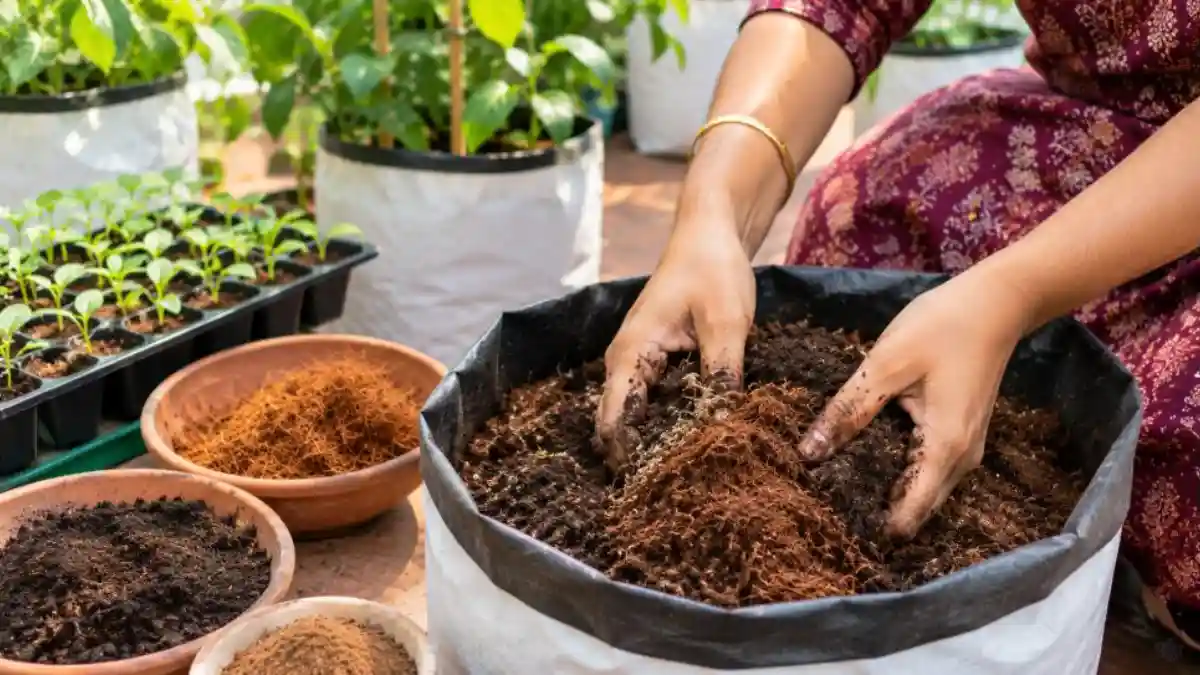
A common light mix is roughly equal parts garden soil, compost (or well-rotted cow dung) and coco peat. Coco peat holds moisture and keeps the mix light. Adding a little neem cake can help deter some soil pests.
Step 5: Select seeds or seedlings
Buy quality seeds from a trusted nursery or your local Krishi Bhavan or agricultural office when available. Beginners can start with seedlings of tomato, brinjal and chilli for faster results.
Step 6: Sow or transplant
Sow small seeds like spinach directly in containers. Start tomato, chilli and brinjal seeds in small trays and transplant them after three to four weeks when they have a few true leaves.
Step 7: Water correctly
Water early in the morning or in the evening. Check soil moisture with your finger; water when the top inch feels dry. Overwatering is a common mistake in a terrace vegetable garden.
Step 8: Feed the plants
Add a handful of compost every two to three weeks. Liquid organic fertilisers such as diluted compost tea or fermented organic solutions help leafy and fruiting plants grow well.
Step 9: Support climbers
Beans, bitter gourd, cucumber and other climbers need trellises, strings or nets. Install supports early so you do not disturb the roots later.
Step 10: Harvest regularly
Pick vegetables when they are young and tender. Regular harvesting encourages plants to produce more.
Best Vegetables for a Terrace Vegetable Garden
| Vegetable | Container size | Sunlight | Beginner friendly? |
|---|---|---|---|
| Amaranthus (cheera) | Small to medium grow bag | Full sun to partial shade | Very easy |
| Spinach and other greens | Shallow tray or small bag | Partial shade | Very easy |
| Chilli | Medium grow bag | Full sun | Easy |
| Tomato | Large grow bag with support | Full sun | Moderate |
| Brinjal | Medium to large bag | Full sun | Easy |
| Okra (vendakka) | Medium to large bag | Full sun | Easy |
| Beans and cowpea (payar) | Medium bag with trellis | Full sun | Easy |
| Bitter gourd and snake gourd | Large bag with pandal | Full sun | Moderate |
| Curry leaves | Large pot | Full sun | Easy once established |
| Mint and coriander | Small pots | Partial shade | Easy |
Seasonal Planning in Kerala
Kerala’s climate allows a terrace vegetable garden almost all year, but timing helps.
- Before the southwest monsoon: Prepare containers and compost; sow hardy greens and plant curry leaves.
- Monsoon months: Heavy rain can waterlog bags and damage tender plants. Grow sturdy greens, raise containers, improve drainage and consider a simple rain shelter for tomatoes.
- After the monsoon (around September to January): This is an excellent period for most vegetables, including tomato, chilli, brinjal, okra, beans and gourds.
- Summer: Provide shade nets for leafy greens, water twice a day if needed and mulch the soil surface to save moisture.
Make Compost at Home
Compost is the heart of a healthy terrace vegetable garden. You can make it from kitchen waste in a bucket, pot or small compost bin.
- Collect vegetable peels, fruit waste, tea leaves and eggshells. Avoid meat, fish, oil and dairy.
- Add a layer of dry leaves, shredded paper or coco peat for every layer of wet waste.
- Sprinkle a little old compost or soil to add helpful microbes.
- Keep it moist but not soggy, and mix every few days for air.
- In about six to eight weeks, you will have dark, earthy compost ready to use.
Natural Pest Control
Pests such as aphids, mealybugs, whiteflies and fruit flies are common. Use gentle, natural methods first:
- Inspect leaves, especially the undersides, every few days.
- Remove affected leaves and handpick caterpillars.
- Spray a diluted neem oil solution with a few drops of soap in the evening.
- Use yellow sticky traps for whiteflies and small flying insects.
- Grow marigold and basil nearby, which can help attract beneficial insects.
- Wash plants with a gentle water spray to dislodge aphids.
Always follow label instructions if you use any product, and harvest only after the recommended waiting period.
Watering Tips and Drip Systems
Watering by hand is fine for a small terrace vegetable garden, but a simple drip system saves time and water for larger setups. Low-cost drip kits with a timer can water all your bags evenly while you are at work. Mulching with dry leaves or coco husk reduces evaporation and keeps roots cool. Collecting rainwater in a tank during the monsoon gives you free, soft water for the dry months.
Common Mistakes Beginners Make
- Overwatering: Leads to root rot; check soil before watering.
- Too little sun: Fruiting plants in shade give poor yields.
- Heavy, compacted soil: Use a light mix with compost and coco peat.
- Overcrowding: One tomato or brinjal plant per large bag is enough.
- Ignoring drainage: Blocked roof drains can cause leaks and damage.
- Starting too big: Begin with a few bags and expand after you learn.
Growing Tips for Popular Vegetables
Chilli
Chilli plants love sun and well-drained soil. Pinch the first few flowers to encourage a bushier plant, and feed with compost every few weeks. For more detailed techniques, read our Malayalam guide on chilli growing techniques.
Tomato
Tomatoes need support from the start, regular watering and plenty of sun. Remove side shoots on tall varieties and watch for leaf spots in humid weather. Our article on tomato plant growing tips shares simple home remedies.
Brinjal
Brinjal is hardy and productive in a terrace vegetable garden. Use a large bag, stake the plant when it starts fruiting and check regularly for shoot and fruit borers. See our guide to easy brinjal cultivation.
Leafy greens
Amaranthus, spinach and fenugreek grow quickly and can be harvested within a few weeks. Sow a small batch every two weeks for a continuous supply.
Coriander
Crush coriander seeds lightly before sowing to improve germination, and keep the soil moist. Partial shade helps in hot months; our coriander growing techniques post explains more.
Organic Sprays You Can Make at Home
Many gardeners use simple homemade sprays as a first line of defence. A diluted neem oil spray helps against soft-bodied insects, while fermented rice water is used by many home growers in Kerala as a gentle plant tonic; our guide on rice water pesticide explains one method. Beneficial microbes such as Pseudomonas, available from agricultural stores, are also widely used to support plant health. Test any spray on a few leaves first and apply in the evening.
Get Help From Your Local Krishi Bhavan
Kerala’s agriculture department works through Krishi Bhavans in every panchayat and municipality. Officers can advise on suitable vegetables, seed sources, organic inputs and any current programmes for home and terrace farming. Visit your local Krishi Bhavan or check the official Kerala Department of Agriculture Development and Farmers’ Welfare website for announcements. Local farmers’ groups and residents’ associations also run seed exchanges and workshops, which are great places to learn from experienced terrace gardeners.
Vertical Gardening for Small Terraces
If your terrace is small, grow upwards. Use wall-mounted planters, tiered stands and hanging baskets for herbs and greens, and train climbers like beans and gourds on a pandal or trellis. Vertical setups make the most of limited space, improve air circulation and make watering and harvesting easier. Just make sure wall-mounted structures are secure and do not damage the building’s waterproofing.
Budget: What You Need to Start
You can start a small terrace vegetable garden with a modest budget. Here is a typical beginner kit:
- 10 to 15 grow bags of different sizes.
- Garden soil, compost or cow dung manure and coco peat.
- Seeds or seedlings for five or six vegetables.
- A watering can or hose, a small trowel and a pair of garden gloves.
- Neem oil or neem cake for basic pest control.
- Bamboo sticks or nylon net for climbers.
- Bricks or stands to keep bags off the floor.
Prices vary by city and supplier, so compare nurseries and look for local agricultural department programmes that sometimes support home vegetable gardening in Kerala.
A Simple Weekly Routine
| Day | Task |
|---|---|
| Daily | Check moisture and water if needed; look for pests |
| Twice a week | Harvest greens and ripe vegetables |
| Weekly | Remove yellow leaves, tie climbers, add mulch |
| Every 2–3 weeks | Add compost or liquid organic fertiliser |
| Monthly | Clean drains, rotate crops, sow a fresh batch of greens |
Real Examples
Latha in Thrissur: Latha started her terrace vegetable garden with ten grow bags of cheera, chilli and okra. Within two months she was harvesting greens twice a week. She now makes her own compost from kitchen waste and has expanded to thirty bags.
Ajith in Kochi: Ajith works long hours, so he installed a simple drip kit with a timer. His tomatoes and brinjals grow well even when he travels, and his family enjoys pesticide-free vegetables.
A retired couple in Kollam: They grow curry leaves, mint, spinach and beans on a small terrace. Gardening has become their morning exercise, and they share surplus vegetables with neighbours.
Crop Rotation and Soil Renewal
Growing the same crop in the same bag season after season tires the soil and invites pests. Rotate crops: follow fruiting vegetables like tomato with leafy greens or beans, which are lighter feeders. After each harvest, loosen the old soil, mix in fresh compost and a handful of neem cake, and let it rest in the sun for a few days before replanting. This keeps your terrace vegetable garden productive year after year without buying fresh soil every time.
Saving Seeds for the Next Season
Once your terrace vegetable garden is established, you can save seeds from healthy, open-pollinated plants such as cowpea, okra, chilli and amaranthus. Let a few fruits mature fully on the plant, dry the seeds in shade, and store them in labelled paper envelopes in a cool, dry place. Saving seeds reduces costs and helps you keep varieties that perform well on your own terrace. Hybrid seeds, however, may not grow true to type, so buy fresh seeds for those.
Involving Children in the Garden
A terrace vegetable garden is a wonderful outdoor classroom. Give children their own grow bag of quick crops like radish or amaranthus, let them water and observe daily, and celebrate their first harvest together. They learn patience, responsibility and healthy eating habits, and they are far more likely to eat vegetables they have grown themselves.
Many people who start a terrace vegetable garden give up after the first season because of pests or poor yields. The best way to stay motivated is to start with only five or six grow bags of easy crops such as amaranth, okra, chilli and spinach. Once these succeed, add tomato, beans and gourds. A small terrace vegetable garden that produces steadily is more satisfying than a large one that fails, and it teaches you how sunlight, water and soil behave on your own roof.
Keep a simple notebook or phone note for your terrace vegetable garden. Write down the sowing date, variety, seed source, fertiliser given and the first harvest date. After one year, this record shows which crops grew best in each season on your terrace. It also helps you plan crop rotation, so the same grow bag does not carry tomato or chilli every time, which reduces soil-borne disease in a terrace vegetable garden.
Involve family members in the terrace vegetable garden. Children enjoy sowing seeds, watering and checking for new flowers, and older members often remember traditional methods such as using ash, neem and cow dung slurry. Sharing extra harvest with neighbours also builds interest, and many residential associations in Kerala now run seed exchange groups where terrace vegetable garden owners swap seeds and seedlings every season.
Frequently Asked Questions
How much sunlight does a terrace vegetable garden need?
Most fruiting vegetables need five to six hours of direct sunlight. Leafy greens can manage with less and even prefer some afternoon shade in summer.
Will a terrace vegetable garden damage my roof?
Not if the roof is waterproofed, drains are kept clear and containers are raised off the floor. Avoid concentrating heavy pots in one area.
What is the best potting mix?
A light mix of garden soil, compost and coco peat in roughly equal parts works well for most vegetables.
Which vegetables are easiest for beginners?
Amaranthus, spinach, chilli, okra, beans and brinjal are easy and productive for a first terrace vegetable garden.
How do I protect plants during heavy rain?
Raise containers, improve drainage, avoid overwatering and use a simple transparent rain shelter for delicate plants like tomatoes.
Can I grow vegetables without chemical fertilisers?
Yes. Compost, cow dung manure, vermicompost and organic liquid fertilisers are enough for a healthy home garden.
How often should I water grow bags?
Usually once a day in normal weather and twice in hot summer days. Always check the soil first; if it is moist, skip watering.
Conclusion
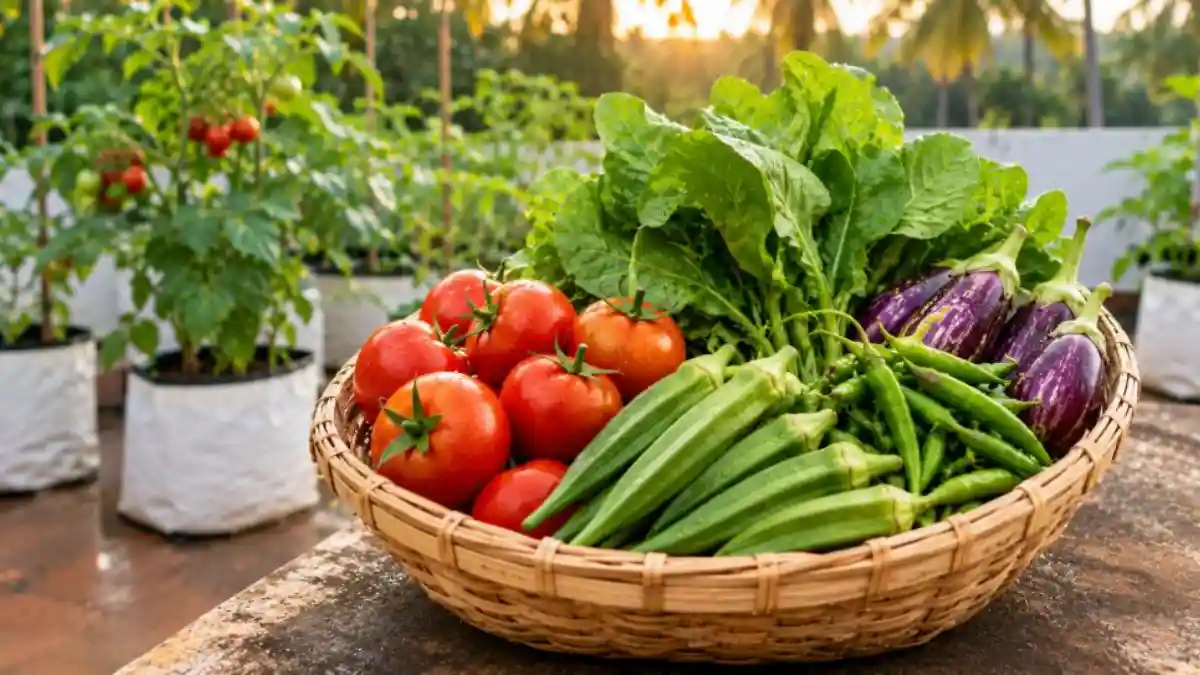
A terrace vegetable garden turns an empty rooftop into a source of fresh, healthy food. Check your terrace, plan for sunlight, use light potting mix in grow bags, choose easy vegetables, water wisely, feed with compost and control pests naturally. Start small, follow the seasons and enjoy the satisfaction of harvesting your own vegetables. With these 10 easy steps, anyone in Kerala or elsewhere in India can grow a thriving terrace vegetable garden in 2026.


